Skip to content

A well-prepared referral can help the treating team understand why a patient is being referred, what is already known about the lesion and what information may be relevant to planning surgery or reconstruction. For facial skin cancer, location can be particularly important because areas such as the eyelids, nose, lips and ears have both functional and aesthetic considerations.
Cancer Council Australia explains that surgery is the most common treatment for invasive basal cell carcinoma and squamous cell carcinoma, while more complex cases may require a surgeon. Reconstruction may involve direct closure, a skin graft or a local flap depending on the defect.
Referral Checklist at a Glance
- Patient details and referring practitioner information
- Reason for referral
- Suspected or confirmed diagnosis
- Biopsy information and pathology results where available
- Location, size and relevant characteristics of the lesion
- Previous treatment or excision
- Relevant medical history
- Current medications and allergies
- Imaging or specialist reports where relevant
- Details of Mohs surgery if applicable
- Specific functional or reconstructive concerns
- Appropriate contact details for coordinating care
A referral does not need to predict the final reconstructive technique. The purpose is to provide the treating specialist with relevant clinical information so that the case can be assessed appropriately.
When to Refer
Referral may be appropriate when a facial skin lesion requires specialist assessment, excision, reconstruction or coordinated planning. The need becomes particularly relevant when the lesion involves areas where relatively small changes can affect function, contour or appearance.
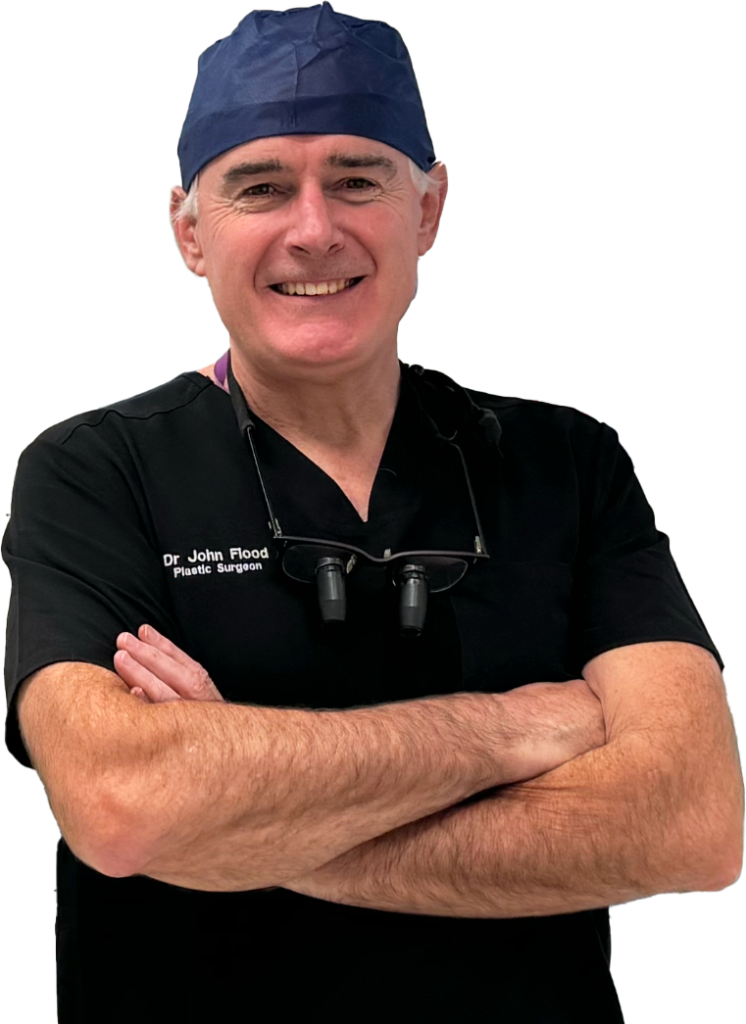
Dr John Flood’s current facial skin cancer surgery service provides information about surgical management of facial skin cancer. The practice also treats cases involving reconstruction after skin cancer treatment.
Facial Areas That May Require Detailed Planning
The eyelids, nose, lips and ears contain structures that influence movement, breathing, eye protection, speech and facial symmetry. Cancer Council Australia notes that reconstruction may be necessary following removal of larger skin cancers and that reconstructive options depend on the wound created by treatment.
For this reason, referral planning should include the exact location of the lesion rather than simply stating that a patient has skin cancer on the face. Where possible, describe the anatomical area and any nearby structures that may be relevant.
Referral Before Excision or After Excision
A plastic surgeon may become involved before excision when reconstruction needs to be considered in advance. In other cases, the patient may be referred after the cancer has been removed and the remaining defect requires specialist repair.
The most appropriate timing depends on the clinical circumstances, the type of cancer, the planned method of removal and the likely defect. The referral should therefore explain what has already occurred and what treatment is planned next.
What Information to Send
The most useful referral contains enough information for the specialist to understand the clinical question before the appointment. A clear reason for referral and relevant medical history should be provided, together with any diagnosis already established.
For suspected or confirmed facial skin cancer, include the lesion location, known diagnosis, biopsy details and any relevant pathology report. If another specialist has assessed the lesion, their report can also help the treating surgeon understand what has already been considered.
Patient History
Relevant history may include previous skin cancers, previous surgery in the same area, previous radiation treatment, significant medical conditions, allergies and medications.
Medication information can be important when planning surgery. A complete list is preferable to relying on the patient’s recollection during the appointment, particularly where medicines may affect bleeding, healing or anaesthesia.
Details of the Clinical Concern
Describe why the referral is being made. The question may be assessment for excision, reconstruction after Mohs surgery, evaluation of a defect, or discussion of a more complex facial reconstruction.
A specific clinical question helps the receiving practice triage the referral and identify the appropriate appointment pathway.
Imaging, Biopsy and Pathology Details
Biopsy information can be particularly important because treatment planning depends on an accurate understanding of the diagnosis. Healthdirect explains that a biopsy involves removing tissue or cells for laboratory examination and that the results can help establish a diagnosis and guide treatment.
Where a biopsy has already been performed, send the pathology report if available. Include the date of the biopsy and the anatomical site so that the pathology can be linked clearly to the correct lesion.
What to Include From the Pathology Report
Where available, include:
- The diagnosis
- The anatomical site
- The specimen type
- Margin information
- Relevant comments from the pathologist
- The date of the report
The treating specialist can then assess how this information relates to the planned surgery or reconstruction.
What About Imaging?
Not every skin cancer referral requires imaging. When imaging has been performed for a specific clinical reason, provide the relevant report and the images or appropriate access details where possible.
Do not request imaging simply to make a referral appear more comprehensive. Investigations should be relevant to the clinical situation and interpreted in the context of the patient’s diagnosis.
Reconstruction Questions That Matter
Reconstruction is not simply about closing a wound. Facial reconstruction may need to account for movement, tissue thickness, skin characteristics, nearby anatomical structures and the location of the defect.
Cancer Council Australia explains that reconstruction after removal of a larger skin cancer may involve a skin flap or skin graft, depending on the wound.
Closure, Grafts and Flaps
The reconstructive options may include direct closure, a skin graft or a local flap. The appropriate method depends on the size, depth and position of the defect, as well as the available surrounding tissue.
Dr John Flood explains that post-Mohs reconstruction may involve direct closure, grafts or local flaps depending on the defect and surrounding tissue. The choice is assessed individually rather than applied as a standard approach.
Functional Considerations
The referral should identify any functional concern that is already known. Around the eyelid, for example, the reconstruction may need to consider eyelid position and eye protection. Around the nose, nasal contour and breathing may be relevant. Around the lips, movement and oral function may need consideration.
Including these concerns can make the referral more clinically useful and help the surgeon understand what needs to be assessed during consultation.
Referrals Following Mohs Surgery
Mohs surgery is a precise technique in which skin cancer is removed in stages and tissue is examined under a microscope during treatment. Cancer Council Australia describes Mohs surgery as a technique that aims to reduce removal of healthy tissue and notes that it requires specialised equipment and training.
A patient may be referred to a plastic surgeon when Mohs surgery has created a defect that needs reconstruction. Dr John Flood’s post-Mohs reconstruction service explains that reconstruction is considered once the cancer has been cleared and the resulting defect has been assessed.
What to Send After Mohs Surgery
Where relevant, provide:
- Mohs operative information
- Final pathology or margin information
- Exact defect location
- Defect dimensions when available
- Photographs where clinically appropriate and securely transmitted
- Details of any reconstruction already attempted
- Relevant medical history and medications
This information can help the surgeon understand the treatment already completed and assess reconstruction options.
Post-Operative Communication and Follow-Up
Good communication does not end when the procedure has been scheduled. Clear information about the referring practitioner and the intended follow-up pathway can support continuity of care.
The receiving specialist may need to provide information back to the referring GP or dermatologist. This is especially relevant when the patient has an established treating team.
What Should Be Communicated?
Where appropriate, communication may include:
- The surgical plan
- The reconstructive approach
- Relevant findings
- Pathology information
- Post-operative instructions
- Wound or scar management considerations
- Follow-up arrangements
- Any concerns requiring further medical review
This creates a clear clinical pathway between the referring practitioner, specialist surgeon and patient.
What Patients Should Bring to a Referral Appointment
Patients can also help make the process more efficient by bringing relevant information. This may include the referral letter, pathology reports, imaging reports, lists of medications and details of previous skin cancer treatment.
Healthdirect recommends discussing any changes in the skin with a doctor and notes that suspicious lesions may be biopsied or referred to a dermatologist for further assessment.
Patients should not attempt to determine their own diagnosis from photographs or online tools. A changing, bleeding or otherwise concerning lesion should be assessed by an appropriate health professional.
Understanding Skin Cancer Treatment
A referral checklist is useful because skin cancer treatment can involve several stages and several clinicians. Healthdirect explains that treatment depends on factors including the type, size and location of the cancer, while Cancer Council Australia notes that surgical excision is the most common treatment for invasive basal cell carcinoma and squamous cell carcinoma.
The purpose of reconstruction is to address the defect after cancer treatment while considering the function and appearance of the affected area. The exact reconstructive plan cannot be determined from the referral alone and must be assessed clinically.
Helpful Australian Clinical Resources
For patients and referring practitioners seeking independent information, Cancer Council Australia provides information about skin cancer surgery and reconstruction.
Healthdirect Australia provides information about skin cancer symptoms, diagnosis and treatment, while its biopsy information explains how tissue samples are examined to establish a diagnosis.
For Australian general practice resources, the RACGP clinical resources provide guidance and educational materials for general practitioners.
Coordinating the Next Stage of Care
A facial skin cancer referral does not need to answer every clinical question before the patient reaches the specialist. Its purpose is to provide the relevant information already known, identify the clinical question and support continuity of care.
Dr John Flood has a particular interest in facial skin cancer surgery and reconstruction and treats areas including the scalp, forehead, eyelids, cheeks, lips and ears.
To discuss referral coordination or an appropriate appointment pathway, contact Dr John Flood’s practice.
Help Your Patient Arrive With the Right Information
A clear referral can make it easier for the patient and treating team to understand what has already been investigated, what treatment has occurred and what needs to happen next. For facial lesions, providing accurate anatomical and pathology information is particularly valuable because reconstruction must be planned around the structures involved.
Where specialist assessment is required, contact Dr John Flood to discuss referral coordination, appointment timing and operative planning.